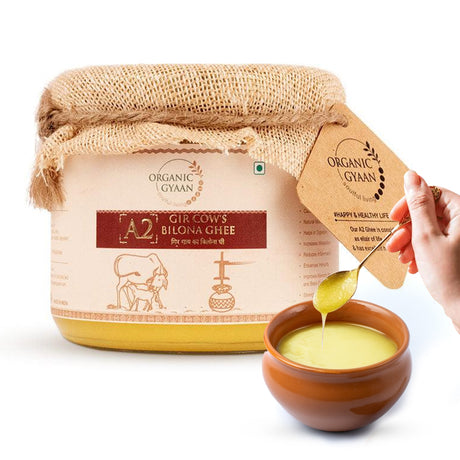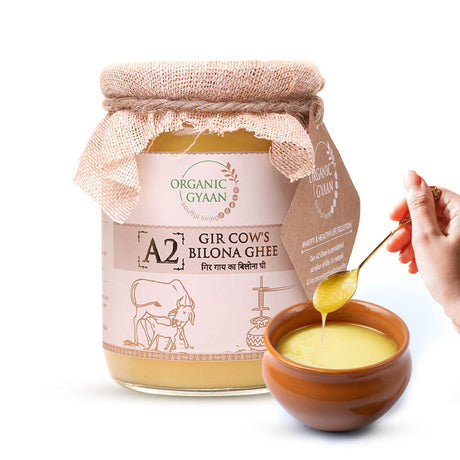

Did You Know? 9 Out of 10 Parents Are Feeding Their Babies the Wrong Ghee
Here's a fact that will make you pause: most commercially sold ghee in India today is made from hybrid cow breeds that produce A1 beta-casein protein - a protein that research links to digestive discomfort, gas, and inflammation, especially in infants whose gut is still developing.
Yet millions of parents are spooning this into their baby's first bowl of dal-khichdi, thinking all ghee is the same.
It isn't.
If you've ever heard the term "A2 ghee" and wondered what the fuss is about - or if you're a parent trying to make the best nutritional choice for your baby - you're in the right place.
This is the most complete guide you'll find on A2 Bilona Cow Ghee for babies: what it is, why it's fundamentally different from regular ghee, what science actually says, how to introduce it safely to your infant, and how to avoid the fakes flooding the market.
Let's begin.
What Is A2 Ghee? (And Why It's Not the Same as "Just Ghee")
Most people assume ghee is ghee. But the difference between A2 ghee and regular ghee is not about branding - it goes right down to the molecular level of the milk protein.
The A1 vs A2 Protein Difference
All cow's milk contains a protein called beta-casein, which makes up about 80% of the total milk protein. But beta-casein comes in two variants:
- A1 beta-casein - found in milk of crossbred and hybrid cows (Holstein, Jersey, HF breeds). When digested, A1 protein produces a peptide called BCM-7 (Beta-casomorphin-7), an opioid-like compound linked to digestive discomfort, gut inflammation, and in some research, more serious health concerns.
- A2 beta-casein - found naturally in the milk of India's indigenous cow breeds like Gir and Sahiwal. A2 protein does not produce BCM-7 during digestion. It is structurally gentler and far easier for the human digestive tract to process - especially for a baby's immature gut.
The difference? A single amino acid. In A1 beta-casein, the 67th amino acid is histidine. In A2 beta-casein, it is proline. That one substitution changes everything about how the protein behaves inside a tiny baby's body.
What Is the Bilona Method - And Why Does It Matter for Babies?
The second defining feature of A2 Bilona Cow Ghee is how it's made. This isn't just a production detail - it directly impacts the nutritional quality your baby receives.
Mass-Produced Ghee (Cream/Malai Method):
- Milk → Cream is separated mechanically
- Cream is directly heated at high industrial temperatures
- Ghee is produced quickly, at scale
- Result: Nutrients, enzymes, and heat-sensitive fatty acids are partially degraded
Traditional Bilona Method:
- Fresh A2 cow milk is collected and boiled
- Milk is cooled and fermented overnight into curd (dahi)
- Curd is hand-churned using a wooden churner (bilona) in a slow, circular motion - the same way it's been done for 5,000 years
- Butter (makhan) is extracted from the churned curd
- Butter is slowly heated on a low flame in an iron or earthen vessel using cow dung cakes or wood fire
- The result is pure, granular, aromatic A2 Bilona Cow Ghee that retains its full nutritional integrity
The bilona method is slower, more labour-intensive, and requires more milk (it takes roughly 25–30 litres of A2 cow milk to produce just 1 litre of bilona ghee). This is why authentic A2 ghee costs more - and why cheap versions claiming to be bilona-made are almost always adulterated.
A2 Ghee vs Regular Ghee: Complete Side-by-Side Comparison
|
Feature |
A2 Bilona Cow Ghee |
Regular (A1) Ghee |
|
Milk Source |
Indigenous Gir / Sahiwal cows |
Hybrid / crossbred cows |
|
Protein Type |
A2 beta-casein only |
A1 + A2 beta-casein mix |
|
BCM-7 Production |
None |
Yes — linked to inflammation |
|
Production Method |
Traditional bilona (curd-churned) |
Industrial cream separation |
|
Butyric Acid Content |
High |
Lower |
|
Omega-3 & CLA Content |
Higher (grass-fed cows) |
Lower |
|
Nutrient Retention |
Superior (low-heat process) |
Reduced (high-heat processing) |
|
Digestibility for Babies |
Excellent |
May cause gas/bloating/discomfort |
|
Lactose Content |
Near zero |
Near zero |
|
Additives/Preservatives |
None (if authentic) |
May contain |
|
Colour |
Deep golden-yellow |
Pale yellow to white |
|
Aroma |
Rich, nutty, grainy |
Mild, neutral |
|
Price (approx.) |
₹1,800–₹3,500/kg |
₹400–₹800/kg |
|
Best for Babies? |
Highly recommended |
Less preferred |
8 Science-Backed Benefits of A2 Ghee for Babies and Infants
1. Supports Rapid Brain Development
A baby's brain doubles in size in the first year of life and reaches approximately 80% of adult size by age three. This extraordinary neurological development is almost entirely powered by healthy fats.
A2 ghee delivers:
- DHA (Docosahexaenoic acid) and ARA (Arachidonic acid): Structural components of brain cell membranes, essential for neural connectivity
- Omega-3 and Omega-6 fatty acids: Support cognitive development and memory formation
- Choline: Critical for neurotransmitter production, supporting mood and learning
A 2018 Pediatric Research study found that adequate DHA intake is directly linked to improved memory and focus in school-aged children. A2 ghee also supports Long-Term Potentiation (LTP) - the brain's ability to strengthen neural connections, which is the biological foundation of learning and memory.
Parent Tip: Add ½ teaspoon of A2 ghee to your 6-month-old's morning oats or khichdi for a daily brain-development boost.
2. Easier Digestion Than Regular Ghee
This is perhaps the biggest reason paediatricians are increasingly recommending A2 ghee over regular ghee for infants.
Regular (A1) ghee releases BCM-7 during digestion - an opioid peptide that can trigger:
- Bloating and gas
- Frothy or watery stools
- Gut inflammation
- General digestive discomfort
A2 ghee avoids BCM-7 entirely. Instead, it contains butyric acid - a short-chain fatty acid (SCFA) that is the preferred fuel for colonocytes (colon-lining cells). Butyric acid:
- Nourishes and repairs the intestinal lining
- Supports healthy gut flora (good bacteria)
- Reduces gut inflammation
- Improves nutrient absorption
For babies transitioning from breast milk to solid foods - a stage where digestive upset is extremely common - this difference is clinically significant.
Quick Tip: Mix a small amount of warm bilona cow ghee into mashed rice, dal, or pureed vegetables if your baby shows signs of constipation or digestive difficulty.
3. Natural Immunity Booster
A baby's immune system is immature for the first 2–3 years of life. What you feed them during this window literally shapes their immune architecture for life.
A2 ghee provides a comprehensive immunity-building nutrient stack:
|
Nutrient |
Immune Function |
|
Vitamin A |
Supports respiratory lining and immune defence |
|
Vitamin D |
Regulates immune response; reduces infection risk |
|
Vitamin E |
Powerful antioxidant; protects immune cells |
|
Vitamin K2 |
Supports immune activation and bone development |
|
CLA (Conjugated Linoleic Acid) |
Promotes immune cell activity; studied for anti-cancer properties |
|
Butyric Acid |
Strengthens gut-immune barrier (70% of immunity lives in the gut) |
|
Antioxidants |
Neutralise free radicals; reduce oxidative stress |
A 2020 review in Frontiers in Immunology linked butyrate (from ghee) to reduced respiratory infections in children. In winter months particularly, adding desi cow ghee to your baby's diet provides a meaningful seasonal immunity shield.
4. Builds Strong Bones from Day One
The first three years of life are when the skeleton undergoes its most rapid mineralisation. A2 ghee is specifically rich in nutrients that drive this process:
- Vitamin D: Regulates calcium and phosphorus absorption - without adequate Vitamin D, the body cannot properly use dietary calcium regardless of how much is consumed
- Vitamin K2: Activates proteins that direct calcium into bones rather than soft tissues
- Linoleic Acid: Supports bone mass density
- Calcium and Phosphorus: Trace amounts present in traditionally prepared bilona ghee
A2 Bilona Cow Ghee is one of the few natural foods that delivers Vitamins D and K2 together - a combination that modern nutrition science recognises as synergistic for bone development.
5. Healthy Weight Gain and Sustained Energy
Underweight babies are a significant concern for many Indian parents. Ghee for babies - specifically A2 ghee - is one of the most effective and safe tools for healthy weight gain because:
- It is calorie-dense without being nutritionally empty
- It contains medium-chain triglycerides (MCTs) that are directly metabolised for energy, not stored as fat
- A 2019 American Journal of Clinical Nutrition study found MCTs improve cognitive function and energy levels in children
- It contains zero trans fats and no artificial additives
Unlike processed baby foods or refined cooking oils that provide empty calories, A2 ghee provides calories packed with fat-soluble vitamins, fatty acids, and antioxidants.
Dosage Guide for Weight Gain:
- 6–8 months: ¼ teaspoon per day
- 8–12 months: ½ teaspoon per day
- 1–2 years: ½–1 teaspoon per day
- 2–5 years: 1–2 teaspoons per day
6. Eye Health and Vision Development
Infants are born with limited visual acuity that develops rapidly over the first year. A2 ghee is one of the richest natural sources of Vitamin A, which:
- Supports the development of the retina and visual pigments
- Prevents dry eye syndrome
- Enhances the hydration level of the eyes
- Strengthens the eye's natural defence against infections
Gir cow ghee gets its distinctive deep golden-yellow colour from beta-carotene - the precursor to Vitamin A - present in the milk of grass-fed Gir cows. This is something regular ghee from hybrid breeds typically lacks.
7. Skin Health: Inside and Outside
A2 ghee benefits a baby's skin both when consumed and when applied externally.
When eaten: The healthy fats, Vitamin E, and antioxidants in bilona cow ghee nourish skin from within, promoting healthy cell turnover, moisture retention, and a natural glow.
When applied (baby massage):
- Natural moisturising fatty acids keep skin soft and smooth in dry or cold weather
- Reduces dryness, irritation, and mild rashes common in newborns
- Supports muscle and bone development through massage stimulation
- Is completely free from synthetic chemicals, fragrances, or preservatives
This dual functionality - both dietary and topical - makes A2 ghee uniquely versatile for infant care.
8. Supports Thyroid and Hormonal Balance
A2 ghee contains trace amounts of iodine, which supports proper thyroid gland functioning from infancy. The thyroid is responsible for regulating metabolism, growth rate, and neurological development - all critical in the first 1,000 days of life.
Additionally, because A2 ghee is sourced from cows raised on natural pastures without synthetic hormones or antibiotics, it is free from endocrine-disrupting compounds that can interfere with a baby's delicate hormonal development.
Is A2 Ghee Safe for Babies? What Paediatricians Say
Yes - A2 ghee is widely considered safe for babies from 6 months of age onwards, when solid foods begin. It is not just safe; many paediatricians actively recommend it.
Here's what makes A2 ghee for babies safe:
- Nearly lactose-free: The ghee-making process removes milk solids, eliminating virtually all lactose. This makes it suitable even for babies with mild lactose sensitivity.
- Casein-free: Milk solids (including casein protein) are removed during clarification, making it safe for most babies with dairy protein sensitivity.
- No additives or preservatives: Authentic, traditionally prepared A2 ghee contains nothing except pure clarified butter fat.
- Hypoallergenic: While no food is 100% allergy-proof, A2 ghee is among the least allergenic dairy-derived foods available.
When to Be Cautious:
- If your baby has a confirmed cow's milk protein allergy (CMPA), consult your paediatrician before introducing any dairy-derived product including ghee.
- Avoid ghee during episodes of jaundice, hepatitis, or liver disorders as fat metabolism is impaired.
- Excessive consumption is counterproductive. Moderation is key.
How to Introduce A2 Ghee to Your Baby: Step-by-Step
Step 1 - Wait Until 6 Months
Do not introduce any ghee - including A2 ghee - before 6 months of age. The WHO recommends exclusive breastfeeding for the first 6 months.
Step 2 - Start with the Tiniest Amount
Begin with just 2–3 drops mixed into a familiar soft food your baby already accepts (mashed rice, dal, vegetable purée). This prevents rejection due to new taste/texture.
Step 3 - Warm It Gently
A2 ghee solidifies at room temperature (a sign of purity). Warm it slightly before mixing into food. Always test temperature on your inner wrist - it should feel warm, not hot. Never feed hot ghee to a baby.
Step 4 - Observe for 3–5 Days
Watch for signs of intolerance: skin rash, unusual gas, changed stool consistency, vomiting, or discomfort. If you notice any, stop and consult your paediatrician.
Step 5 - Gradually Increase Quantity
If well-tolerated, increase to ¼ teaspoon after one week, then slowly progress based on your child's age (see dosage guide above).
Step 6 - Diversify How You Use It
Once your baby is comfortable with A2 ghee, explore these introduction methods:
- Mixed into khichdi, dal, or rice
- Drizzled over soft-cooked vegetables
- Stirred into porridge or ragi
- Added to warm milk for toddlers (1 year+)
- Spread thinly on soft chapati for toddlers
Traditional Natural Remedies Using A2 Ghee for Babies
Indian households have used bilona cow ghee for infant care for millennia. Here are the most trusted traditional applications, now validated by modern wellness practitioners:
1. Baby Massage (Abhyanga)
Warm a small amount of pure A2 ghee and gently massage your baby's limbs, back, tummy, and feet using slow, circular strokes. Best done after a warm bath when the baby is relaxed.
Benefits: Strengthens bones and muscles, improves circulation, nourishes skin, promotes relaxation and sleep quality.
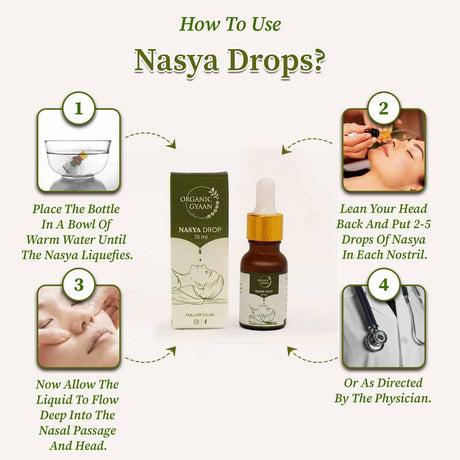
2. Natural Cold and Congestion Relief (Nasya)
Warm a drop of A2 ghee very lightly (not hot). Add 1–2 drops to each nostril using a clean dropper when your baby has severe nasal congestion.
Benefits: Lubricates nasal passages, eases congestion, traditional Ayurvedic nasya therapy for infants.
Always consult your paediatrician before using nasal drops of any kind on infants under 3 months.
3. Chest Rub for Cough and Cold
Warm A2 ghee infused with 2–3 garlic cloves. Allow to cool to warm (not hot). Gently massage onto your baby's chest and back.
Benefits: Traditional remedy for infant cough relief. The antimicrobial properties of garlic combined with the warming effect of desi cow ghee help ease respiratory discomfort.
4. Navel Oiling
Apply a single drop of A2 ghee to your baby's navel (belly button) at bedtime.
Benefits: Ancient Ayurvedic practice believed to support systemic wellbeing, improve digestion, and nourish the body through the nabhi marma point.
5. Winter Skin Moisturiser
Apply a thin layer of A2 ghee to dry or irritated skin areas in cold weather. Chemical-free, safe for newborn skin, and far superior to synthetic baby lotions.
Note: Always perform a patch test on a small area first. Consult your paediatrician for infants under 1 month.
How to Choose Authentic A2 Bilona Cow Ghee for Your Baby
The market is flooded with products claiming to be "A2 ghee" or "bilona ghee" that are neither. Here's exactly what to verify before buying:
1. Verify the Cow Breed
Authentic A2 ghee comes only from indigenous Indian breeds: Gir (Gujarat), Sahiwal (Punjab/Haryana), Tharparkar, Rathi, or Badri. The label should name the specific breed. "Desi cow" without specifying breed is a red flag.
2. Confirm the Bilona Process
The label must explicitly state "bilona method" or "curd-churned" ghee. "Traditional" alone means nothing without specifying the curd-churning step. Cream-based or malai ghee is not bilona ghee, regardless of what else it claims.
3. Check the Price
Pure, authentic A2 Bilona Cow Ghee requires 25–30 litres of milk per litre of ghee, plus hand-churning labour. It cannot be priced below ₹1,500/kg and maintain quality. Any "A2 bilona ghee" priced below ₹1,000/kg should be treated with serious suspicion.
4. Look for the Colour
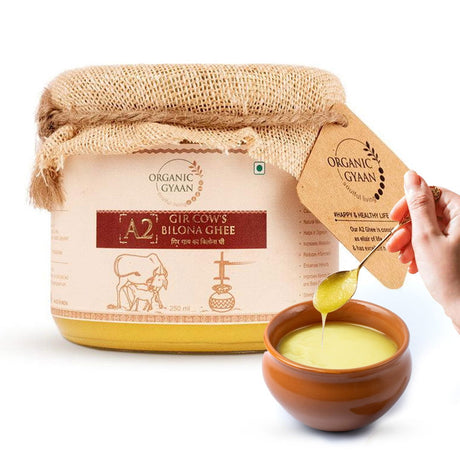
Genuine Gir cow ghee is deep golden-yellow, derived from the high beta-carotene content in Gir cow milk. Pale yellow or white ghee from indigenous breeds is unusual and may indicate cross-breeding or adulteration.
5. Texture and Aroma
Pure bilona cow ghee should:
- Be granular (daanedar) when solid - not smooth or waxy
- Have a rich, nutty, aromatic smell - not neutral or chemical
- Melt immediately on your palm from body heat alone (palm test)
- Turn golden-brown without white foam when heated in a pan
Common Questions Parents Ask (FAQ)
1. At what age can I give A2 ghee to my baby?
After completing 6 months of age, once solid foods are being introduced. Never before 6 months.
2. How much A2 ghee should I give my baby per day?
Start with 2–3 drops and build up slowly. By 8–12 months, ½ teaspoon per day is appropriate. By 1–2 years, ½–1 teaspoon. Consult your paediatrician for guidance specific to your child.
3. Can A2 ghee cause obesity in babies?
No, when given in appropriate amounts. Ghee is lipolytic - it supports fat metabolism. The MCTs and CLA in A2 ghee actually support healthy body composition. Excessive amounts of any calorie-dense food, however, can cause weight gain - moderation is key.
4. Is A2 ghee safe for lactose-intolerant babies?
Yes. A2 ghee contains near-zero lactose because milk solids are removed during preparation. It is generally considered safe for babies with mild lactose sensitivity, though consultation with your paediatrician is always recommended.
5. Can I use A2 ghee for baby massage if they have eczema?
A2 ghee is a natural, chemical-free moisturiser that many parents use for mild dry skin. However, for diagnosed eczema or significant skin conditions, always consult a dermatologist or paediatrician before applying any topical product.
6. What is the difference between A2 ghee and desi ghee?
"Desi ghee" is a broad term meaning traditional Indian ghee from cows (as opposed to buffalo). A2 ghee is a more specific classification indicating ghee made from cows that produce only A2 beta-casein protein. Not all desi ghee is A2 ghee, though all authentic A2 bilona cow ghee is technically desi ghee.
7. Does A2 ghee expire?
When stored in a cool, dry place away from direct sunlight in an airtight container, authentic A2 ghee has a shelf life of 12–18 months. It does not require refrigeration. Refrigeration can extend shelf life further.
Conclusion
India's ancient wisdom said: "Ghee is not just food - it is medicine."
Modern nutrition science is finally confirming what Ayurveda has known for 5,000 years. But not just any ghee - A2 Bilona Cow Ghee, made from the milk of India's indigenous cow breeds through the traditional hand-churning process, stands apart as one of the most complete, natural superfoods you can offer a growing infant.
The investment you make in authentic A2 ghee today - for your baby's brain, gut, bones, immunity, and skin - pays dividends for the rest of their life.
Here's your action plan:
- Consult your paediatrician about introducing A2 ghee at 6 months
- Choose a certified, authentic bilona cow ghee brand with clear Gir/Sahiwal sourcing
- Start small, observe carefully, and build up slowly
- Use it both in your baby's food and as a natural baby massage oil
- Share this guide with other parents who are still using regular ghee for their infants
Did this guide help you? Share it with your parent community, bookmark it for reference. Every baby deserves the golden start that authentic A2 ghee provides.
Buy Best A2 Gir Cow Ghee